The short answer
A standing desk works perfectly well on carpet. Three things change and all three are manageable: the desk needs leveling on the pile rather than on a hard floor, so level it in the room it will live in and at the height you will actually use; any wobble at full extension is amplified because the feet sink unevenly, which the leveling feet are there to fix; and the feet will leave dents in the pile that mostly recover. Casters are the one thing to think twice about — a soft floor and wheels is where stability genuinely suffers.
The short answer
Nothing on a carpet forces a different desk. What carpet does is take a desk that was marginally stable on tile and make that margin visible, which is why it gets blamed for wobble it did not cause.
Leveling on a soft floor
Almost every sit-stand frame has threaded leveling feet, and on carpet they are not optional. The pile compresses differently under each foot depending on the load above it, so a desk levelled on a workshop floor arrives at your room out of true.
Level it loaded, in place, at standing height
Put the monitors and everything else on first, raise the desk to the height you actually stand at, then adjust the feet until the rock disappears. Leveling an empty desk at seated height fixes the wrong configuration.
Give the pile a few minutes to settle after you move the desk, then re-check. It will have moved.
Wobble at full height
Every sit-stand desk flexes more at its ceiling than at its floor, because the legs are at full extension and the lever arm is longest. Carpet adds a compressible layer underneath that, so a small amount of flex becomes a visible sway.
The fixes are the same ones that work on a hard floor, in the same order — the wobble guide runs through them. The carpet-specific additions are to level it loaded, as above, and to keep the heaviest items over the legs rather than out at the unsupported span.
If you are still choosing a desk and the room is carpeted, the structural answer is a frame with a low published floor and a wide stance, or four legs instead of two — four-leg versus two-leg covers that trade honestly, including what four legs cost you under the desk.
Dents, pile and floor marks
A desk weighing 60 to 120 lb on four small feet concentrates a lot of pressure. Expect dents. On most synthetic pile they lift most of the way out over a few days once the weight moves; on wool and on older carpet they can be close to permanent.
If that matters to you, spread the load: a hard chair mat, a square of thin plywood, or furniture coasters under each foot all work, and all of them also give the leveling feet something consistent to sit on — which quietly solves half the wobble problem too.
Casters on carpet
This is the one combination worth avoiding. Wheels on a compressible floor give you two sources of movement stacked on each other, and a desk that rolls when you lean on it is worse than one that dents the pile.
If the desk has to move, use casters with locks and lock them, or look at desks designed to be mobile and accept that you are trading stability for it.
Mats on carpet
An anti-fatigue mat still earns its place on carpet. Carpet cushions, but it does not stop you standing frozen in one position, which is the actual cause of most standing-desk discomfort. A contoured mat gives your feet somewhere to go; carpet does not.
One practical note: a mat on deep pile can feel unstable because it is a soft layer on a soft layer. A thinner flat mat sits better on carpet than a tall contoured one — contoured versus flat covers the difference.
From the picks
What we would put on carpet
Best middle ground on price and warranty
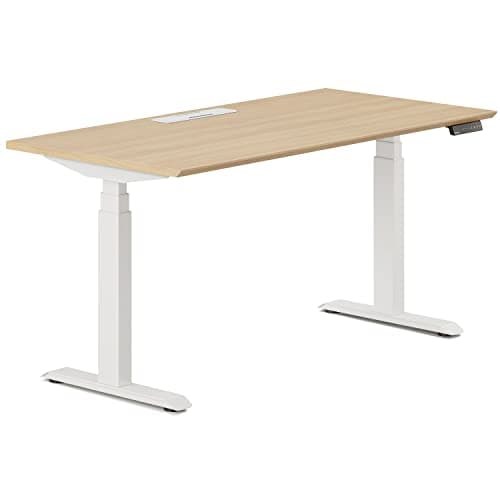
A 275 lb rating and a 27" lift range behind Branch's 10-year desk warranty, sold as one finished desk. It sits between the mass-market and premium tiers on every axis, which is exactly its appeal.
UPLUPLIFT DeskV3 Standing Desk FrameNo licensed photo yet
Best current-generation buy
The V2's replacement, and the one that will actually be in stock. UPLIFT puts the range at 22.6" to 48.7" — a lower floor than the V2, which matters more than the ceiling for most people — on the same 355 lb rating and 15-year warranty.
Best overall standing mat
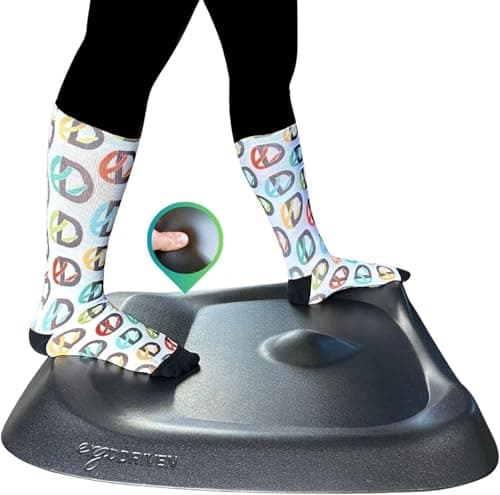
A deliberately not-flat mat: the mounds and calf shelf exist to stop you standing still, which is the actual cause of standing-desk foot pain. Backed for sixteen years.