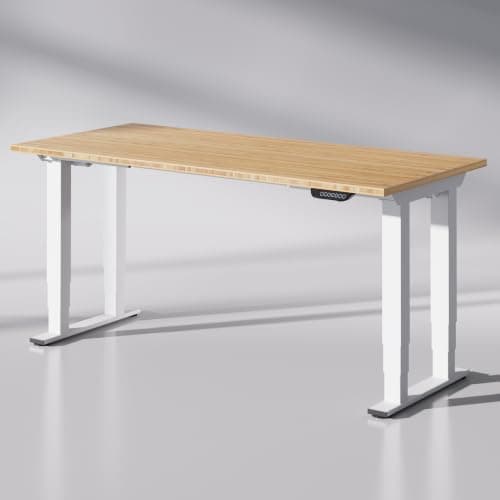
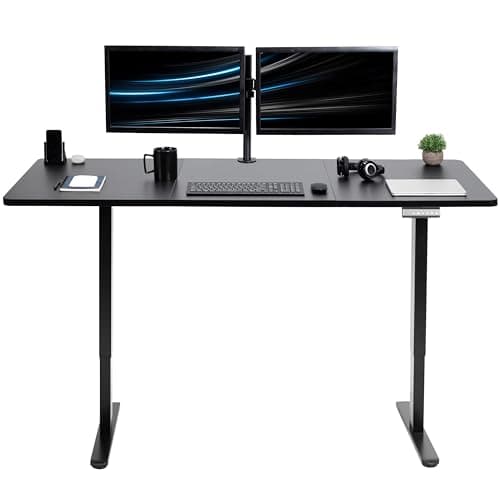
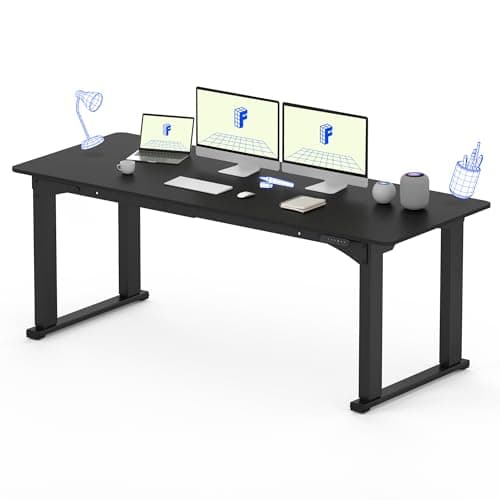
The short answer
A shared sit-stand desk needs three things a single-user desk does not: enough width for two working positions (plan on at least 30 to 36 inches each), memory presets so each person can recall their own height instead of hunting for it, and a height range wide enough to span both bodies — which is the number that actually rules desks out. Capacity matters more than usual too, because you are loading one frame with two full setups.
The short answer
The mistake is shopping for width. Width is the easy part; the binding constraint is that one surface has to be correct for two different people, and only one of them can be right at a time unless you both stand or both sit.
Why presets stop being optional
Two bodies means four heights, recalled daily
A shared desk is moved far more often than a single-user desk: each person has a seated and a standing number, and the desk is cycled between them all day. Holding a button to hunt for the right height four times a day gets old in a week.
Four presets covers both people's seated and standing positions exactly; three means somebody is hunting for the fourth. Desks with memory presets covers how the controllers differ.
The span problem
Take both people's seated elbow height and both standing heights, and the desk has to cover the full spread from the lowest of the four to the highest. Two people of noticeably different heights can need a span that a mid-range desk simply does not have.
Get both numbers from the height calculator before you shop. If the spread is wide, the ceiling is usually what fails first for the taller person — which is why the E6Q's 51.57" is on this page despite its high floor.
How much width per person
Thirty inches each is workable for laptops; thirty-six each is comfortable with a monitor apiece. That puts a genuine two-person desk at 60 inches minimum and 72 inches or more if either person runs two screens.
Depth matters as much as width here, because two people sitting at one desk tend to drift into each other's space — the size guide works through the depth arithmetic.
Two setups, one rating
One frame is carrying two monitors, two laptops, two sets of everything else. Published ratings on the desks here run from 220 lb to 440 lb of lifting capacity, and a shared desk is the one case where the top of that range is not overkill.
A motor running near its rating all day wears faster than one running at a third of it — the capacity arithmetic shows the sums.
When two desks beat one
Honestly: often. Two narrower desks, each set to its own person, solve the span problem completely and cost about the same as one wide desk from the band above. You lose the shared surface and the clean look, and you gain two desks that are both the right height all the time.
Buy one wide desk when the room only has one wall for it, when the surface genuinely needs to be continuous, or when the two people are close enough in height that the span is not a problem. Otherwise price up two from the value band before committing.