The short answer
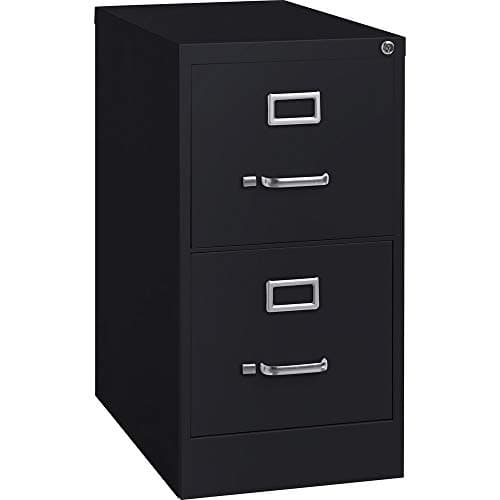
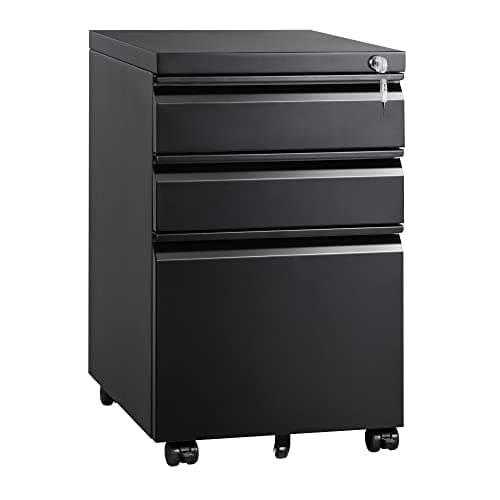
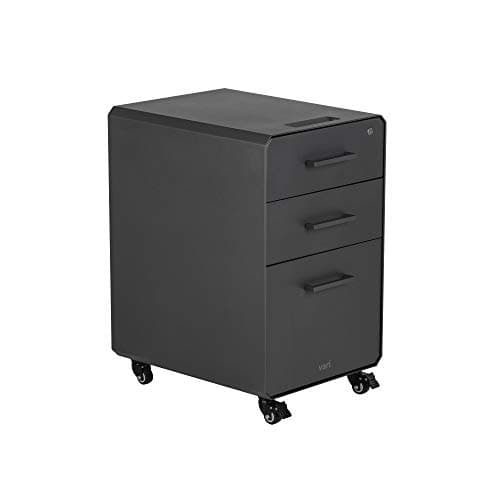
For most home offices the Vari File Cabinet is the pick: three soft-close drawers, one lockable, an in-drawer cable pass-through for charging, and it arrives fully assembled at 25.8" high. If you genuinely file — hundreds of letter-size folders, kept for years — the Lorell Fortress 22" vertical file is the better machine: heavy-gauge steel on ball-bearing suspension, a core-removable lock and a limited lifetime warranty, at 28.4" tall, which means it stands beside your desk rather than under it. The DEVAISE 3-drawer mobile cabinet is the budget answer and the only one here short enough at 23.6" to clear most sit-stand desks at their lowest setting. One measurement decides between them before any feature does, and it is covered first. Every figure on this page is the maker's own published specification, cited at the foot of the page, and each listing was confirmed in stock before it was ranked.
Start with the height rule
This is the whole reason a sit-stand site writes about filing cabinets, and it is the thing general home-office roundups get wrong.
A cabinet has to clear the desk at its LOWEST setting
A sit-stand desk spends part of every day at seated height. That seated height — the desk's minimum, not its average — is the clearance any floor-standing cabinet has to fit under. Measure from the floor to the underside of the desktop with the desk fully lowered, then subtract an inch for the caster you will roll over. That is your cabinet height ceiling.
Run real numbers through it and the category sorts itself out immediately. A FlexiSpot E6 and a Desky Dual both floor at 23.6", an UPLIFT V3 frame at 22.6", a Secretlab MAGNUS Pro at 25.6". Subtract the desktop thickness and you have the usable clearance. A 23.6" cabinet gets under some of those and not others. A 28.4" cabinet gets under none of them.
Which does not make the tall cabinet wrong. It makes it a beside-the-desk purchase, and knowing that before you order is the difference between a filing cabinet and a very heavy side table you cannot open the drawers of.
|
| Overall height | 25.8" | 28.4" | 23.6" |
| Footprint | 15.75" W x 20.63" D | 15" W x 22" D | 14.6" W x 17.1" D |
| Drawers | 3 soft-close, 1 lockable | 2 file drawers | 3 drawers |
| File sizes | Letter or legal hanging files in the lower drawer | Letter-size hanging files | Letter, legal and A4 on detachable bars |
| Mobility | Roll-and-lock casters | Static — no casters | 5 casters, all braked |
| Load rating | Not published | Not published | 330 lb total / 55 lb per drawer |
| Assembly | Ships fully assembled | No assembly required | Body assembled; 5 casters to fit |
| Warranty | Not published on the cited source | Limited lifetime | Not published |
What we ranked on
Five weighted criteria, applied the same way to every product in this hub — the method is published in full.
Capacity (30%)
Not drawer count. Drawer count is marketing; what matters is how many hanging folders actually fit and how much weight a drawer will take before it binds. A three-drawer pedestal with two shallow stationery drawers holds a fraction of what a two-drawer vertical file holds, and the two-drawer cabinet is the one with three drawers' worth of paper in it.
Build quality (25%)
On a filing cabinet this means one thing above all: the drawer slides. A loaded file drawer is heavy and cantilevered, and cheap slides either bind or sag until the drawer scrapes. Ball-bearing suspension is the specification to look for, and it is the one most consumer cabinets quietly do not mention.
Works with a moving desk (20%)
The height rule above, plus whether the thing rolls. On a sit-stand setup a cabinet that rolls can be pulled out when the desk is up and pushed back when it is down; a static cabinet lives where you put it forever.
Security (15%) and value (10%)
A lock matters more in a home office than people expect — not against burglary, but against everyone else who lives in the house. What kind of lock matters too, and that gets its own section below.
1. Vari File Cabinet — best overall
The Vari wins because it is the only cabinet here that is designed around a desk that moves, and because it gets the boring parts right.
Three soft-close drawers, one of them lockable with two keys included, and the lower drawer takes letter- or legal-size hanging files. It is 25.8" high by 15.75" wide by 20.63" deep, on roll-and-lock casters, and it ships fully assembled — which is rare on a filing cabinet and worth real money. Flat-pack steel cabinets are among the least pleasant things to build in a home, and one that arrives done removes an hour of swearing.
The detail that separates it from a generic pedestal is the cable opening for in-drawer device charging, plus an accessory tray. A charging pile is the single ugliest thing on most desks, and a drawer with a cable pass-through makes it disappear instead of relocating it. The cable guide explains the one-cable-to-the-wall rule that this drawer is the end point of.
Honest cons. It costs several times a flat-pack pedestal. Only one of the three drawers locks, so the other two are open to anyone in the room. At 25.8" it is taller than the DEVAISE, so it clears fewer desks at their lowest setting — check your clearance before assuming it goes under. And no warranty term is stated on the source we cite, which is a gap on a steel product that should outlive the desk.
2. Lorell Fortress vertical file — best if you actually file
This is the cabinet for someone with paper. Not a few folders — paper, in volume, kept for years, needing to be found.
Two file drawers in a 15" W x 22" D x 28.4" H body, high-sided so they take letter-size hanging folders properly rather than approximately. Ball-bearing slide suspension with steel ball bearings, which Lorell specifically claims stays smooth and quiet even when the drawers are fully loaded — the exact failure mode of cheaper cabinets. Heavy-gauge steel with 28% recycled content. Adjustable wire followers to keep files upright, an aluminum label holder and a pull handle on each drawer. No assembly required, GREENGUARD certified, and a limited lifetime warranty.
That warranty is the headline. Nothing else in this category comes close, and on a product whose moving parts are a pair of drawer slides, a lifetime term is a meaningful statement about the slides.
Honest cons. At 28.4" tall it will not fit under a sit-stand desk at any realistic seated height — it is a beside-the-desk cabinet, full stop, which is why it scores low on this hub's moving-desk criterion while still ranking second overall. It is 22" deep and needs clearance in front to open fully. This model is letter-size only; legal files need a different Fortress width. And it carries commercial list pricing, so check the current street price before committing — list and street diverge a long way on contract furniture.
3. DEVAISE 3-drawer pedestal — best budget pick
The DEVAISE earns its place on one number: 23.6" high. That makes it the only cabinet here that clears the underside of most sit-stand desks at their lowest setting, and on this site that is not a minor spec.
It is a 17.1" deep by 14.6" wide steel pedestal with three detachable hanging bars, so it takes letter, legal and A4 hanging folders depending on how you configure it — genuinely useful flexibility that more expensive cabinets do not offer. The total load rating is 330 lb with 55 lb per drawer, which is more than most consumer cabinets are willing to publish at all. All five wheels brake, and DEVAISE states that the two front casters and the middle one are positioned to prevent the unit tipping when a loaded drawer is out — a real engineering consideration on a narrow, tall box. There is a built-in lock, the body arrives assembled, and the pulls are full-height recesses on both sides so it opens from either direction.
Honest cons. 55 lb per drawer is a ceiling you can actually hit — a drawer packed solid with legal files will reach it. At 14.6" wide this is a pedestal, not a filing system; if you have four drawers' worth of paper, buy the Lorell. No warranty term is published on the product page. And the recessed side pull, while clever, is awkward for some people on a heavily loaded top drawer.
Pedestal or vertical: the real decision
Nearly every filing cabinet sold for a home office is one of two things, and choosing the wrong one is the most common mistake in the category.
A pedestal is short, narrow, usually on casters, and designed to live beside or under a desk. It holds a modest amount of paper, plus the stationery and cables that have nowhere else to go. It is the right answer when your filing is a few dozen folders and your real problem is that the desk surface is covered in things.
A vertical file is full height, static, and designed around one job: holding as many hanging folders as possible in the smallest floor area. It is the right answer when you have years of records to keep and retrieve. A two-drawer vertical file typically holds far more paper than a three-drawer pedestal, which is why drawer count is such a misleading number.
The test is simple and nobody applies it: how many inches of paper do you own? Stack your existing files, measure the stack, and buy for that plus about 30%. If the answer is under a foot, a pedestal is plenty and you should spend the difference on getting the monitor off the desk instead. If the answer is three feet, no pedestal on the market will do, and buying one is buying the problem again in six months.
Letter, legal and the mistake that wastes a drawer
Hanging folders come in letter (8.5 x 11) and legal (8.5 x 14) widths, and a drawer built for one does not take the other. Letter files will sit in a legal drawer but they rattle around and fall over without a follower block; legal files simply do not fit a letter drawer at all.
So check which your paper actually is before you buy, and note how the three picks handle it. The Vari takes letter or legal hanging files in its lower drawer. The Lorell Fortress model here is letter-size only. The DEVAISE ships three detachable hanging bars and supports letter, legal and A4, which is the most flexible arrangement of the three — and if you are not sure what you will be filing in three years, flexibility is worth more than it looks.
The adjustable wire followers on the Lorell address the other half of this problem. A file drawer with space at the back lets everything lean, and a leaning drawer is a drawer you cannot flip through. A follower that moves forward as the drawer empties keeps the files upright, and it is the kind of detail only contract furniture bothers with.
Locks, and what a lock on a file cabinet is for
A home office lock is not burglary protection. A determined thief will carry the whole cabinet out, and a 15-inch steel box is not a safe. What a lock does is keep documents away from the other people who live in your house, and keep a drawer shut while the cabinet rolls.
The three picks differ in a way worth understanding:
- Vari — one of three drawers locks, with two keys included. The other two are open. For most people that is the right split: tax records locked, pens not.
- Lorell — a factory-installed, core-removable lock, which allows optional one-key convenience across multiple files. That is a facilities feature: swap the core and several cabinets open with the same key, without replacing the cabinets. If you ever expect a second cabinet, it is a genuine advantage.
- DEVAISE — a built-in lock covering the cabinet, at the lowest price here.
If you are storing anything genuinely sensitive — client records, medical paperwork — the honest advice is that none of these three is a security product, and the lock is a deterrent against casual access rather than a control.
The conflict nobody warns you about
Here is the trade-off specific to a sit-stand setup, and it catches people who buy the desk, the cabinet and the treadmill in three separate orders.
The space under a standing desk is finite, and both a filing cabinet and a walking pad want it. A walking pad needs roughly its whole footprint clear and unobstructed; a filing cabinet needs a block of floor plus clearance to open a drawer. Under a standard 60-inch top you are choosing one, not fitting both.
If you want both, the resolution is usually to put the cabinet beside the desk rather than under it — which, conveniently, is exactly where the tallest and best-filing cabinet here has to go anyway. Decide the floor plan before you order, because a cabinet that has to stand beside the desk is a different purchase from one that tucks under it, and the height rule at the top of this page only binds on the second.
For the rest of what has to survive a desk that travels two feet several times a day, the under-desk storage page covers the narrower question, and desks with storage built in explains why bolting a drawer to a moving desktop is usually the wrong answer.