The short answer
A walking pad's published weight limit is the maximum user weight, not the total load, and it is a continuous-duty figure unless the maker says otherwise. The highest ratings we can cite are 400 lb: the UREVO CyberPad for Office states support for users up to 400 lb, and the MERACH UltraWalk W60 publishes 400 lb peak with 330 lb sustained — which is the single most useful distinction on this page, because sustained is the number that matters for a working day. Below those, the UREVO SpaceWalk 3S is 265 lb and the KingSmith WalkingPad C2 is 220 lb. Plan to use about 80% of whichever figure applies to you, because a motor working at its ceiling for hours is a motor on its way to a fault.
What the number covers
Three things people assume the rating includes, and only one of them is right.
It is your body weight. That is the figure the maker is quoting, and it is the one to compare yourself against.
It is not a total deck load. A pad is not rated to hold your weight plus a box of books plus a dumbbell rack. If you are using it for anything other than walking, there is no published figure covering you.
It assumes walking, not running. Impact loads during a run are a multiple of static body weight, and these are walking machines — speeds top out between 3.7 and 4.0 mph across the pads we rank. The pad-versus-treadmill comparison is the page for anyone planning to run.
Peak versus sustained
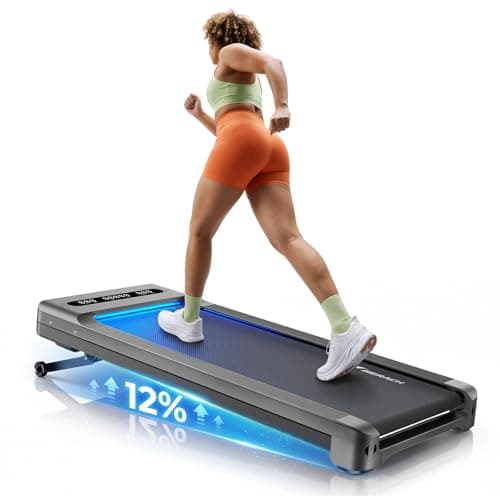
MERACH is unusually candid about the UltraWalk W60 and publishes both figures: up to 400 lb peak, 330 lb sustained. Most makers publish only one number, and the honest assumption is that a single number is the sustained figure.
Which figure to shop with
Sustained is what the motor and deck will carry continuously — the number that governs an eight-hour working day. Peak is a short-duration tolerance. If you are within 70 lb of a pad's peak rating, you are shopping against the wrong number. The W60 at 330 lb sustained is a 330 lb pad for our purposes, not a 400 lb one.
The motor spec is the other half of the same story. The W60 publishes a 1.25 CHP continuous and 3.5 HP peak brushless motor with Hall sensor control and dual-vent cooling, which is why it carries the highest sustained figure here. The WalkingPad C2 is a 1 HP brushless motor, and its 220 lb rating is consistent with that.
The headroom rule
A pad run near its limit for hours a day will not fail dramatically. It will get hot, trip its overload protection, and eventually need a motor. So the practical rule is to leave margin.
- Use about 80% of the sustained rating as your real ceiling. On a 220 lb pad that is roughly 175 lb of comfortable daily use; on a 330 lb sustained pad, about 265 lb.
- Add margin again for long sessions. Four hours a day is a different duty cycle from twenty minutes, and nothing in the published specs distinguishes them.
- Add margin for incline. An inclined pad works the motor harder at the same speed and weight. The CyberPad offers 0 to 14% automatic incline and the SpaceWalk 3S nine levels of roughly 0 to 9% — the incline ranking covers what that costs.
The four ratings we can cite
|
| UREVO CyberPad for Office | Up to 400 lb user weight | 39.4" x 16.5" | Not published as a CHP figure | 0.6 – 4.0 mph, 0 – 14% automatic incline |
| MERACH UltraWalk W60 | 400 lb peak, 330 lb sustained | 41.3" x 16.5" | 1.25 CHP continuous, 3.5 HP peak brushless | 12 levels of automatic incline |
| UREVO SpaceWalk 3S | Up to 265 lb user weight | 42.5" x 16.54" | Not published as a CHP figure | 0.6 – 4.0 mph, nine-level incline |
| KingSmith WalkingPad C2 | 220 lb (100 kg) | 47.2" x 15.8" | 1 HP brushless | 0.5 – 3.7 mph, no incline |
Note the inversion in the belt column: the pad with the lowest weight rating has the longest belt, and the two 400 lb pads are the two shortest. That is the trade this category keeps making, and it is why the high-capacity ranking is a different list from the best-overall one.
From the picks
What we'd actually buy
Two 400 lb pads, the mid-weight pad with the best belt-to-rating balance, and the small-room option — in descending order of rating.
Best high weight capacity
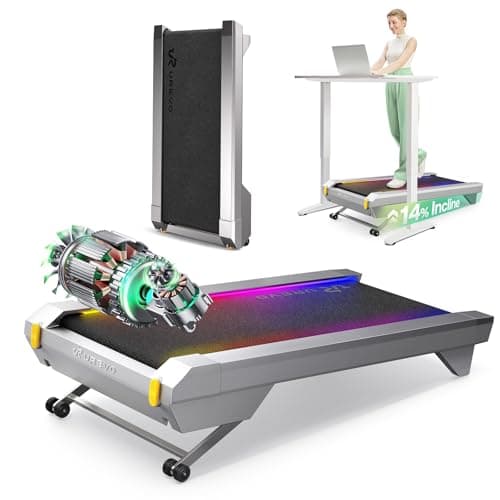
A 400 lb rating with automatic incline to 14% — the only pad here that covers both a heavy user and a hill. The 39.4-inch belt is the compromise that buys it.
A 400 lb peak rating on a 67.7 lb steel frame puts this in a different class from the light folding pads. It is built around the deck and the motor rather than around how small it folds.
Best incline pad for most people
Nine incline levels and a 42.5-inch belt — the better balance of the two UREVO pads unless you specifically need the 400 lb rating.
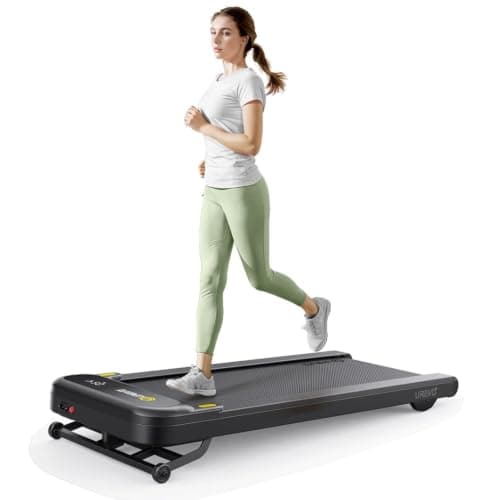
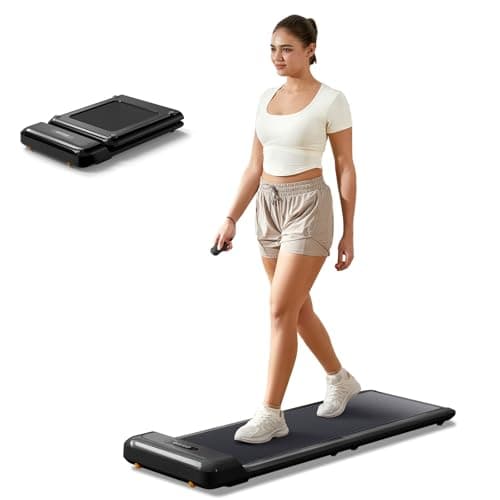
Folds in half to a 32-inch footprint, which is the entire point. The 220 lb rating and 3.7 mph ceiling are the two limits to check against yourself before you buy.
What exceeding it looks like
Not a crack and a collapse. The failure pattern on an overloaded pad is gradual and recognisable:
- The belt hesitates under your heel strike, especially at the slowest speeds, because the motor is working hardest where it has least mechanical advantage.
- The deck or the housing gets noticeably warm, and the sound changes as the motor labours. MERACH states around 54 dB in average use; a pad that is suddenly louder than it was is telling you something.
- It cuts out and resets. Overload protection is a feature, not a fault — but it is a sign you are over the line, not a reason to keep going.
- It stops being covered. Operating outside the published user weight is the clearest way to void a warranty claim on the part most likely to need one.
The two limits that bite first
For most people the weight rating is not the binding constraint, and it is worth knowing which one is before you shop on this number alone.
Belt length against your stride. This is the spec that actually decides whether a pad is usable. Belts here run from 39.4 to 47.2 inches, and a taller user outgrows a short belt long before a heavy user reaches a 400 lb ceiling. The belt-length guide has the sizing method.
Your desk, not your pad. A pad raises you by its own deck height, so your desk has to reach your standing elbow height plus that. The desk-plus-treadmill page works through the combination, and the height calculator gives you the number to add to. A desk that tops out at 47 or 48 inches is the real limit for a tall user on a pad.
If your weight is close to the top of what these pads publish, the honest reading is that this category has two options and the high-capacity page ranks both. We are not going to pad the list with units whose ratings we cannot cite.