The short answer
Walking stride at a slow pace is roughly your height times 0.4, and you want a belt meaningfully longer than that because you do not walk in the exact center. Under 5'6", a 39" belt is workable. Between 5'6" and 5'10", look for 42" or more. Above 5'10", look for 45" or more.
Work out your stride
You can measure it properly — walk ten normal paces, measure the distance, divide by ten — or use the height-based estimate, which is close enough for choosing a pad.
|
| 5'2" | about 25" | 39" and up |
| 5'6" | about 26.5" | 40" and up |
| 5'10" | about 28" | 42" and up |
| 6'2" | about 30" | 45" and up |
| 6'6" | about 31" | 47" and up |
The gap between stride and belt is deliberate. You drift forward and back on a moving belt, your stride lengthens as you speed up, and you need room to correct without stepping off the back.
Belt length by height
|
| KingSmith WalkingPad C2 | 47.2" x 15.8" | About 6'4" |
| UREVO SpaceWalk 3S | 42.5" x 16.54" | About 5'11" |
| UREVO CyberPad for Office | 39.4" x 16.5" | About 5'8" |
| MERACH UltraWalk W60 | 41.3" x 16.5" | About 5'11" |
The surprise in that table
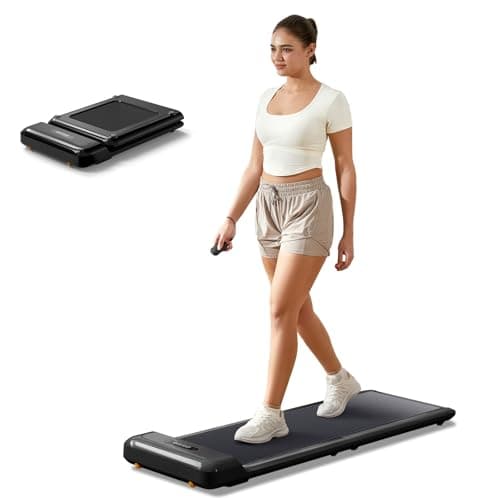
The pad that folds to 32" has the longest belt. The KingSmith C2's 47.2" walking area beats every non-folding pad we rank, which makes it the default recommendation for tall users despite its 220 lb rating being the lowest here. If you are tall
and heavy, those two constraints currently point at different products —
we say so plainly here.
What a short belt feels like
Three symptoms, in the order people notice them:
- You shorten your stride without deciding to. Which produces a shuffling gait, and over hours that is its own source of hip and lower-back complaint.
- Your toes find the front roller. Startling, and the reason a lot of pads end up under a bed.
- You drift backward and step off. Especially while concentrating on something on screen, which is the entire use case.
None of these are fixable with an accessory or a setting. Belt length is the one spec you cannot work around, which is why it leads our main ranking.
Belt length is the first filter on the budget ranking, and it is the spec that incline pads trade away to fit their mechanism under one end of the deck. If you have not settled whether a pad belongs in your setup at all, start here instead.
Which pads clear it
From the picks
Pads by belt length, longest first
Match the belt to your stride before you weigh anything else — capacity, incline and noise are all negotiable, and this is not.
Folds in half to a 32-inch footprint, which is the entire point. The 220 lb rating and 3.7 mph ceiling are the two limits to check against yourself before you buy.
UREUREVOSpaceWalk 3SNo licensed photo yet
Best incline pad for most people
Nine incline levels and a 42.5-inch belt — the better balance of the two UREVO pads unless you specifically need the 400 lb rating.
Best high weight capacity
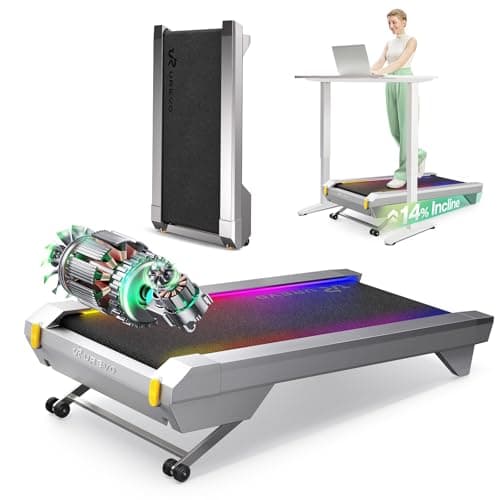
A 400 lb rating with automatic incline to 14% — the only pad here that covers both a heavy user and a hill. The 39.4-inch belt is the compromise that buys it.