The short answer
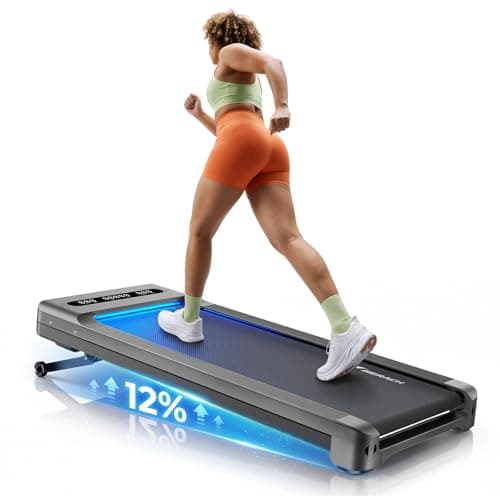
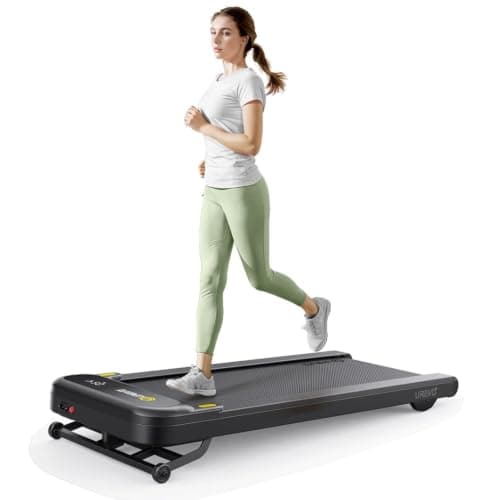
The UREVO SpaceWalk 3S is the budget pick: a 42.5 by 16.54 inch belt, 0.6 to 4.0 mph, and nine levels of automatic incline, which is more usable deck and more capability per dollar than anything else at this end of the market. Its limit is a 265 lb user rating, so if you are anywhere near that, the MERACH UltraWalk W60 is the step up worth taking — 400 lb peak, 330 lb sustained, a 41.3-inch deck and around 54 dB in average use. If your constraint is the room rather than the price, the KingSmith WalkingPad C2 folds to 32 by 20 by 5.5 inches, which no other pad here comes close to. Belt length and weight headroom are the two specs never to compromise at any budget.
What a cheap pad actually cuts
Walking pads look interchangeable in listings — a flat slab, a belt, a remote — and the price spread between them is enormous. The spread is real, and it lands on four things in roughly this order:
- Belt length. The cheapest pads run short decks. This is the one that decides whether you can walk naturally or have to shorten your stride, and it cannot be fixed with anything.
- Weight rating. Both the user rating and whether the maker distinguishes peak from sustained load.
- Motor rating and cooling. A continuous-horsepower figure and a cooling story, versus a peak figure quoted alone.
- Incline. Genuinely optional, and the first thing we would give up — which is why it is notable that the cheapest pad here has it.
Notice what is not on that list: speed range. Every pad we rank tops out between 3.7 and 4.0 mph, which is a brisk walk and the entire point of the category. A pad that advertises 6 mph is advertising a feature you should not use under a desk. The difference between a pad and a treadmill is the whole argument there.
Belt length is the first spec
The number to check before the price
Your walking stride at 2 mph is roughly 25 to 30 inches, and you need the belt to be meaningfully longer than that so your foot lands mid-deck rather than at the edge. A 42-inch belt is comfortable for most adults. A 39-inch belt is the practical floor and starts to bind on anyone much over 5'10". Short decks are the single most common returned-pad complaint, and no motor, incline or app fixes one.
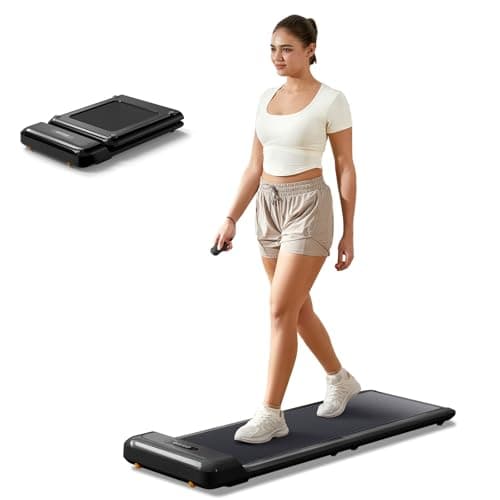
That is why the SpaceWalk 3S wins this page at the lowest price: 42.5 inches of belt is genuinely enough for most people, and it is longer than pads costing considerably more. The MERACH at 41.3 inches is close behind. The WalkingPad C2 publishes a 47.2 by 15.8 inch walking area, which is the longest here and the narrowest — the trade it makes to fold as small as it does.
Width matters less than length but it is not nothing. Sixteen and a half inches is the norm on these; the C2's 15.8 inches is tight if you walk with your feet apart or tend to drift. If you are tall or long-striding, the belt-length guide works through the stride arithmetic properly and should probably come before this page.
Weight rating is the second
Walking pad weight ratings are not safety limits in the way desk capacity ratings are. They are duty ratings — the load the motor and belt are designed to carry for hours, every day. Running a pad at its stated ceiling is how the motor and belt wear out early, which means the rating you want is your weight plus real headroom, not your weight exactly.
The three pads here span this widely. The C2 publishes 220 lb. The SpaceWalk 3S supports users up to 265 lb. The MERACH publishes 400 lb peak and 330 lb sustained, and that distinction between peak and sustained is itself a sign of a maker being straight with you.
The practical rule: pick a pad rated at least 50 lb above your weight. If that pushes you past the budget end, the high-capacity ranking is the page to read instead, and it is an upgrade worth making before you upgrade anything else.
The three, measured
|
| UREVO SpaceWalk 3S | 42.5" x 16.54", 7-layer belt | 0.6 – 4.0 mph | Up to 265 lb | Nine levels, roughly 0 – 9% | Not published |
| MERACH UltraWalk W60 | 41.3" x 16.5" | Not published as a range | 400 lb peak, 330 lb sustained | Twelve levels, automatic | Around 54 dB in average use |
| KingSmith WalkingPad C2 | 47.2" x 15.8" | 0.5 – 3.7 mph | 220 lb | None | Idling noise stated at 65 dB |
Read the noise column with suspicion in both directions. These are manufacturer figures measured under conditions nobody publishes, and they are not comparable across brands. What is comparable is whether a maker publishes one at all: MERACH states around 54 dB in average use, KingSmith states idling noise lowered to 65 dB, and UREVO does not publish a figure for the 3S. "Idling" and "average use" are different measurements of different things.
If the pad is going in an apartment with neighbors below, the quiet ranking treats noise as the primary constraint and reaches a different conclusion on purpose — and the honest finding there is that the floor matters more than the pad.
Motors, duty cycles and noise
Motor specifications on walking pads are the most abused numbers in the category, because there are two legitimate ways to quote one and only one of them is useful.
Peak horsepower is what the motor can do for a moment. Continuous horsepower (CHP) is what it can do all day, which is the only figure that describes what a walking pad does. The MERACH publishes both — 1.25 CHP continuous and 3.5 HP peak — along with Hall sensor control and dual-vent cooling, and that is the shape of a specification you can trust. The C2 publishes a 1 HP brushless motor without distinguishing peak from continuous.
The practical consequence is heat rather than speed. A motor running near its continuous limit for ninety minutes gets hot, and heat is what kills controllers. If you intend to walk for long sessions rather than ten minutes at a time, the cooling story matters more than the headline number — and so does being honest about how much you will really walk.
What you still have to buy
A walking pad under a standing desk is two purchases, and the second one surprises people.
The desk has to go high enough with you on the pad. A pad adds roughly four to six inches under your feet, and that comes straight off your desk's usable ceiling. Add your pad height to your standing number from the height calculator and check it against the desk. This is the most common way the combination fails, and the desk-and-pad ranking exists for exactly that reason.
The floor underneath matters. On a hard floor a pad transmits every step into the structure. On carpet the pad's feet sink and the deck flexes. Either way a dense mat under it helps more than anything you can change about the pad.
You will not walk all day. Plan on sessions, which means you need a place for the pad to live between them — and a place to stand when you are not walking. A contoured mat and a pad in the same footprint is a real conflict worth planning for rather than discovering.
Why no prices appear in this text
The budget framing is a bracket, not a quote
No dollar figure is typed into the body of this page. Walking pad prices move weekly and this category runs some of the most aggressive promotions in home fitness, so a number written into an article is misleading within a month. Every price on this site comes live from the retailer when the page loads; where we cannot hold a verified live figure, the button reads "check price".
The three pads here were the budget-end picks when this page was written, ranked against each other on belt and weight rather than on their position in a price list.
What we left out, and why
Every pad with no published belt dimension. A large share of the cheapest listings state a speed range, a motor figure and nothing about the deck. The deck is the product. We cannot rank what a maker will not publish, and the silence is the finding.
Pads with handrails. A handrail turns a walking pad into a compact treadmill, which is a different product with a different footprint and a different reason to exist. The comparison is here.
The UREVO CyberPad for Office. Above this budget, and the better buy if you need a 400 lb rating with 0 to 14% automatic incline — but its 39.4-inch belt is the shortest of the UREVO pads, which is a real cost. The incline ranking covers it properly.
Nothing on this page has been used by anyone here. Every figure above is the manufacturer's or the retailer's published specification, cited below, and where a maker does not publish a figure this page says so rather than estimating one.