The short answer
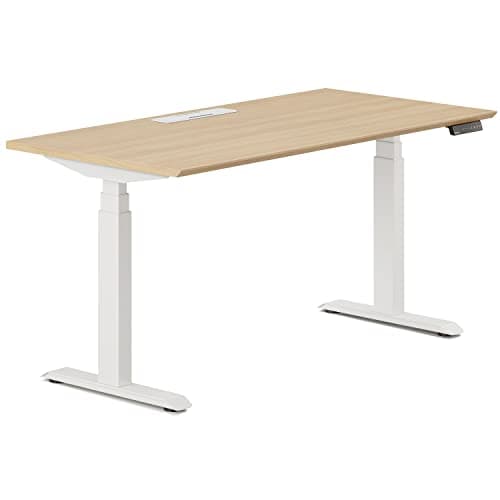
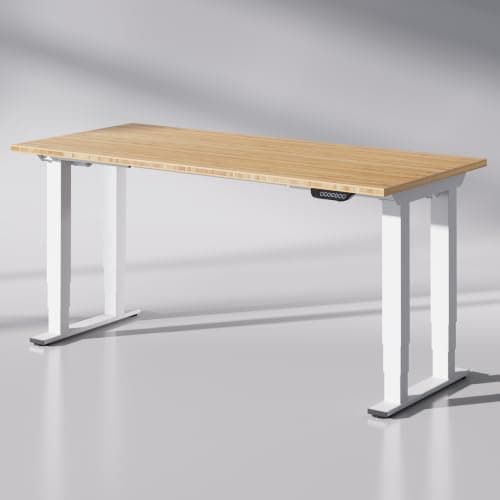
The heaviest-duty sit-stand desk we can cite a figure for is the FlexiSpot E6Q Premium: 540 lb of static load, 440 lb of lifting capacity, four legs under a finished 72 by 30 inch top, and a 25.98 to 51.57 inch range. If you want the same idea as a frame you pair with your own top, the UPLIFT V3 is rated at 355 lb on three-stage legs with a 15-year warranty whose text names the motors and electronics. The best heavy-duty desk actually sold on Amazon as a finished product is the FlexiSpot E6 Pro at 330 lb. Before you use any of those numbers, know that the desktop itself is part of the load, and that a static rating and a lifting rating are two different promises.
Static load and lifting capacity
Two different figures get printed as "capacity", and the gap between them is large. The E6Q Premium is the clearest example because FlexiSpot publishes both: 540 lb static, 440 lb lifting.
Static load is what the desk will hold standing still. It is a structural claim about the top and the legs.
Lifting capacity is what the motors will raise, repeatedly, through the full travel. It is a claim about the gearboxes and the duty cycle, and it is always the smaller of the two. It is also the one that matters, because a desk you cannot raise under load is a fixed desk.
Use the lifting number, always
Where a maker publishes one figure, assume it is the lifting capacity and treat it as a ceiling, not a target. Where it publishes two, the smaller one is the spec you shop with.
The weight-capacity guide works through what happens as you approach it — the symptom is not a collapse, it is a desk that stalls, drifts out of sync or trips its overload cutout halfway up.
Add up your load properly
Most people compare a rating to the weight of their monitors and conclude they have enormous headroom. The real arithmetic includes three things that usually get left out.
- The desktop. On a frame purchase the top is yours and it counts. A solid slab at desk size is a meaningful fraction of a 355 lb rating, and on the Secretlab MAGNUS Pro the desk itself is 125 lb of its own 265 lb distributed load — the most honest illustration of this point in the whole category.
- Everything bolted on. Monitor arms, a CPU holder, a drawer pedestal, a keyboard tray. All of it hangs off the frame, loaded contents included, which is also why drawers and sit-stand desks fight.
- You. Leaning on a desk while you read is a real load, applied at the worst possible place — the unsupported middle of the span.
Totalled honestly, a loaded two-monitor desk with a tower and an arm cluster lands well inside 275 lb. A three-monitor wall, a pedestal and a heavy slab can get past 330. Which is why the field below is short rather than long: past a certain load there are four desks, not forty.
The four, measured
|
| FlexiSpot E6Q Premium | 540 lb static / 440 lb lifting | 25.98" – 51.57" | Four | Not stated on the listing |
| UPLIFT V3 frame | 355 lb lifting | 22.6" – 48.7" | Two, three-stage | 15 years, naming motors and electronics |
| FlexiSpot E6 Pro | 330 lb | 23.6" – 48.8" | Two, three-stage | 10 yr frame and motor, 2 yr electronics |
| Branch Standing Desk | 275 lb | 25" – 52" | Two | 10 years |
Note what the capacity column costs in the height column. The E6Q Premium has the most capacity and the second-highest floor; the UPLIFT V3 gives up 85 lb and buys back three and a half inches at the bottom, which is the difference between a desk you can sit at and one you cannot.
Why the leg count matters more than the rating
A rating tells you what the desk will lift. It does not tell you how it behaves while holding it, and those are different experiences.
A wide two-leg desk carries its load through an unsupported span, so weight in the middle becomes flex, and flex at full extension becomes the wobble people blame on the motors. Four legs put structure under the middle. That is why the E6Q Premium and the FlexiSpot 78x32 both feel more planted than their ratings alone suggest, and why the leg layout is its own decision.
The three-stage question runs the other way. Three-stage legs have more joints, and more joints is theoretically less rigid — but they are also what buys the low floor, and the well-made ones hold up fine. That trade-off has its own page. If your current desk already shakes, the wobble page is the cheaper thing to read first.
The desks that fail this test
Three desks this site rates well elsewhere are deliberately absent, and the reasons are the point of the page.
- Vari Electric Standing Desk: 200 lb, some configurations 220 lb. The lowest rating of any full desk we rank, on a desk whose lifetime defect warranty makes it a fine purchase for a light setup.
- Secretlab MAGNUS Pro: 265 lb distributed, of which the desk is 125 lb. Rigid steel, excellent cable management, and not a heavy-load desk once you do the subtraction.
- FlexiSpot 4-Leg 78x32: four legs and a wide top, but 220 lb and a 47.2 inch ceiling. It solves span, not load.
The honest cost of each pick
- FlexiSpot E6Q Premium. No warranty term stated on the listing, which is a real gap at this money. A 25.98-inch floor is poor for seated work below about five foot five, four legs eat the under-desk floor a walking pad wants, and it comes in one size.
- UPLIFT V3. A frame, not a desk — you still need a top, and the top counts against the 355 lb. It also costs more all-in than the finished FlexiSpot.
- FlexiSpot E6 Pro. Two years on the controller and electronics against ten on the frame, and no extra reach over the cheaper E6.
- Branch. 275 lb is the lowest figure on this page and the configuration list is short. It is here because it is the lightest-duty desk that still covers a normal loaded setup with margin.
What we left out, and why
Desks advertised as heavy duty with no published figure. The phrase is a marketing term, not a specification. If a maker will not state a lifting capacity we have nothing to rank, and an unstated capacity on a four-figure desk is itself an answer.
Frames rated above 400 lb from brands with no US parts channel. A high number is worth little if a failed motor in year three cannot be replaced. Parts availability is scored in the rubric for that reason.
Workbenches and industrial lift tables. Genuinely heavier duty and not desks. If the load is machinery rather than computers, this is the wrong category entirely.
Nobody here has loaded any of these desks to its rating. Every figure above is the manufacturer's or the listing's own published specification, cited below.