The short answer
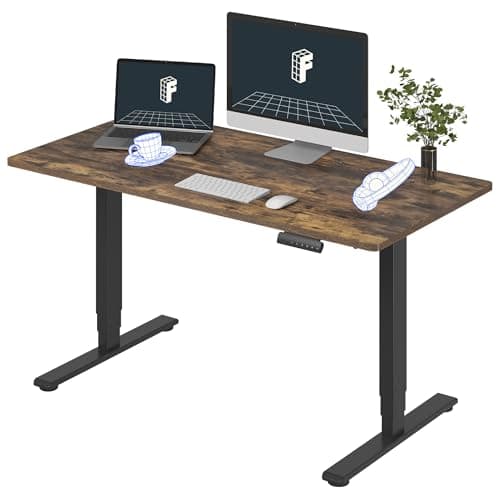
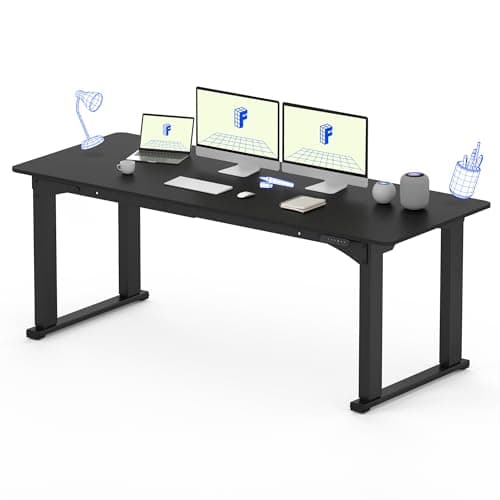
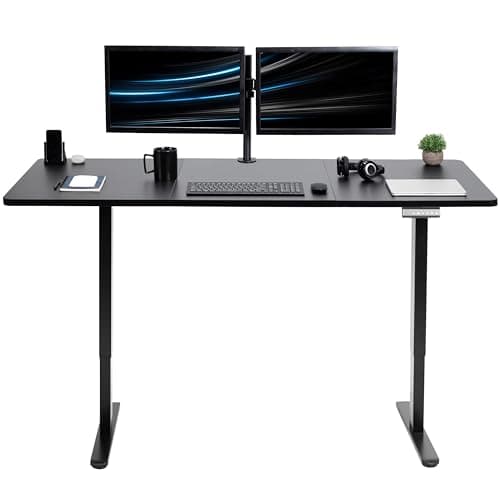
The FlexiSpot E6 is the answer under $400, and the reason is a single number: a 23.6-inch floor. It is the only desk at this cap with three-stage legs and a seated height most adults can actually type at, which means it is the only one that does both halves of the sit-stand job. If you want the most surface area instead, the FlexiSpot 4-Leg 78x32 is nearly seven feet wide on four legs — with a 47.2-inch ceiling that rules out anyone much over six feet. The VIVO E2 71x30 is the cheapest route to a near-six-foot top and stops at a 29.5-inch floor, which makes it a standing desk in the literal sense and not much else.
What a $400 cap actually changes
This site already has a $500 page and a $700 page, and the argument on both is that the category stops asking you to compromise once you clear those caps. Under $400 the argument inverts. Something is definitely getting cut; the whole job of this page is telling you which thing, so you can decide whether it is the thing you needed.
Three things do not get cut at this cap, which surprises people:
- Electric adjustment. Every desk here is a dual-motor electric desk with a programmable controller and saved heights. No cranks, no single-motor compromises.
- Desktop size. Two of the three are wider than any desk on the $700 page. Width is cheap; it is almost the only thing that is.
- A real warranty on the steel. Five years on frame and motor at this cap is normal, and three years is the floor.
What gets cut is reach, and sometimes the bottom of the range specifically.
Reach is where the money went
The number to check before anything else at this cap
The floor, not the ceiling. The FlexiSpot E6 starts at 23.6 inches. The 4-Leg 78x32 starts at 28.7 inches. The VIVO E2 starts at 29.5 inches. A desk whose lowest setting is 29.5 inches cannot be sat at comfortably by most adults, so two of the three desks on this page are effectively one-position desks — and a one-position desk is not a sit-stand desk.
That is the trade this cap makes, and it is worth being blunt about why it matters. The value of a sit-stand desk is not in standing. It is in switching — the thing UT Southwestern's own guidance describes when it tells people to change positions, shift weight and take short walk breaks every thirty minutes. A desk you can only stand at removes half of that. If you are going to spend eight hours at it, you want both positions available or you want a different product.
Before you compare anything on this page, run the height calculator. It produces a standing number and a seated number from your actual body, and those two figures eliminate desks faster than a price cap ever will. If the calculator puts you under about 5'4" or over about 6'2", the short-user ranking and the tall-user ranking both reach conclusions this page cannot, because the desks that solve those problems cost more than this cap.
The three, measured
|
| FlexiSpot E6 | 23.6" – 48.8" | 55.1" x 27.5" | 220 lb | Two, three-stage | 5 yr frame and motor, 2 yr electronics |
| FlexiSpot 4-Leg 78x32 | 28.7" – 47.2" | 78" x 32" | 220 lb | Four | 5 yr frame and motor, 2 yr electronics |
| VIVO E2 71x30 | 29.5" – 48.3" | 70.9" x 29.5" | 220 lb | Two | 3 years |
Three desks, three identical capacity ratings, and a spread of nearly six inches at the bottom of the range. That spread is the entire ranking. The E6 is the only one whose floor clears a seated typing height, which is why it wins a page where it is also the smallest desk by a wide margin.
The ceiling column is tighter than it looks, too. A 47.2-inch ceiling sounds close to 48.8, and for a 5'8" user it is. For a six-footer the calculator typically lands near 44 to 46 inches of desk height — and you want headroom above your number, not a desk that meets it at full extension, because every telescoping frame is least rigid at the top of its range.
Capacity at this cap
All three desks publish 220 lb, which sounds enormous and is less headroom than it reads once you add up a real setup. A 55-inch laminated top is 40 to 60 lb before anything sits on it; two 27-inch monitors on an arm, a tower, a dock and the usual accumulation puts most real desks between 90 and 150 lb. The full arithmetic is worked through here.
So 220 lb is rarely a safety limit. It is a margin question, and margin is mechanical: a frame running at two thirds of its rating moves more slowly, sounds worse and wears its gearboxes faster than the same frame at a third. That is the real cost of this cap, and it is a slow cost rather than a dramatic one.
The 78-inch desk is the one case where the number is closer to a hard limit, because a top that size is itself a large fraction of the rating. Three monitors and a tower on nearly seven feet of desk is the combination to be careful about, and it is also the combination that makes the four-leg geometry worth having.
When a converter beats a cheap desk
This is the recommendation most $400 roundups will not make, and at this cap it is often the right one.
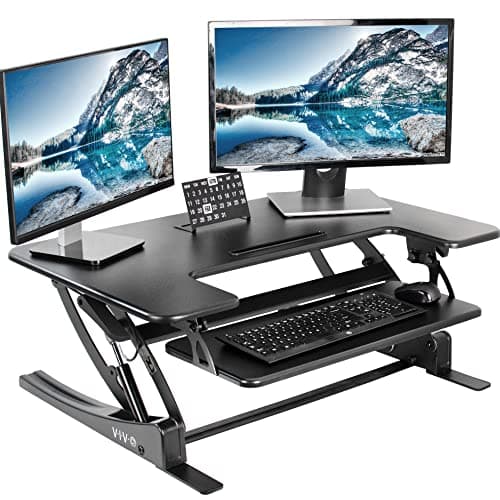
A desktop converter sits on the desk you already own and lifts your screen and keyboard together. It gives you a genuine seated position — your existing desk, unchanged — and a genuine standing position, for well under this page's cap and without replacing any furniture. Compared with a desk whose floor is 29.5 inches, a converter is strictly more sit-stand desk for less money.
From the picks
The converter route at this budget
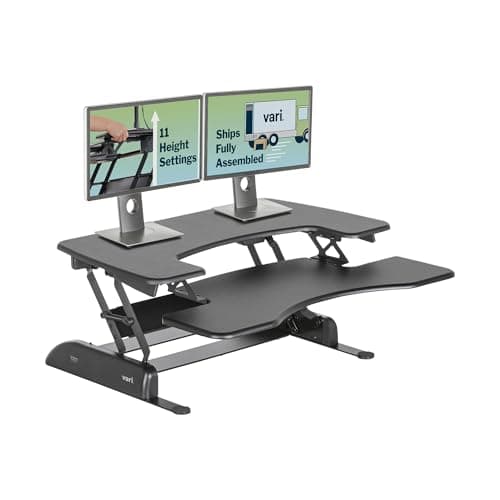
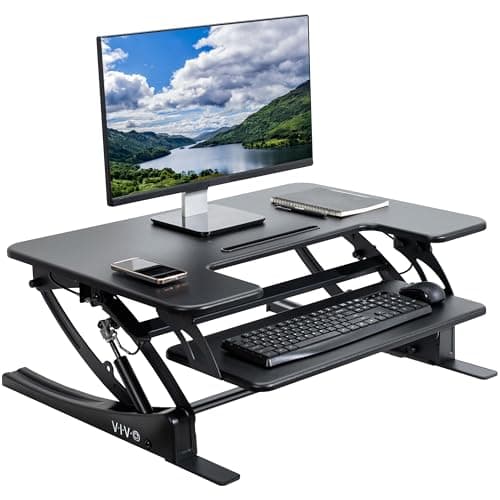
If the honest answer at $400 is 'not a new desk', these are the three we'd put on the desk you already own instead.
Best for dual monitors on a budget
A wide two-tier platform with the most usable surface per dollar in this category. The 33 lb lift limit is the thing to check against your actual monitors before you order.
The converter everyone else is measured against: spring-assisted, arrives assembled, lifetime warranty. It rises 17.5", which is enough for most people at a 29" desk and not enough above about 6'2".
The simplest useful converter here. One person, one laptop, one monitor, and it puts the keyboard on its own tier rather than leaving it up at screen height.
The catch is desk depth: a converter consumes several inches of the top it sits on, and a shallow desk gets crowded fast. The full comparison between the two routes is worth ten minutes before you spend anything, and whether a converter is worth it at all is the honest version of the same question.
Why no prices appear in this text
The cap is a shopping bracket, not a promise
There is not a single dollar figure in the body of this page, which is deliberate on a page whose premise is a price cap. Desk prices in this category move weekly and every maker here runs frequent promotions, so a number written into an article is misleading within a month. Every price on this page comes live from the retailer; where we cannot hold a verified live figure, the button says "check price".
Each desk above was inside $400 and listed in stock when this page was written. A desk that drifts over the cap does not become a bad desk and one that drops under it does not become a good one, which is the honest reason the rest of this page is about height range rather than about the number in the title.
What we left out, and why
Every two-stage frame. They are the bulk of the sub-$400 market and they are where the range goes. Four to six inches less travel from the same collapsed height, and visibly slower movement. The full comparison is here.
Every single-motor desk. One motor driving two legs through a crossbar is slower, noisier and the failure point is shared. Why that matters more than the price difference has its own page.
Manual crank desks. Cheapest of all, and the fastest way to stop using sit-stand entirely.
The FlexiSpot E6 Pro and the Branch desk. Both above this cap, and both better desks for it — more capacity, longer frame warranty, a higher ceiling in the Branch's case. They are on the $700 page where the trade-off is stated in full.
Nothing on this page has been used by anyone here. The one desk this site has lived with costs several times this cap. Every figure above is the manufacturer's or the retailer's published specification, cited below.