The short answer
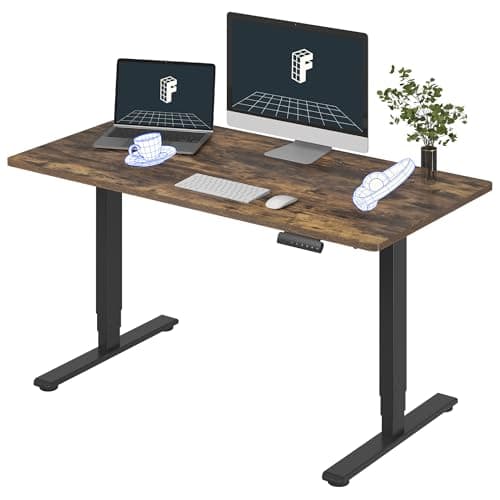
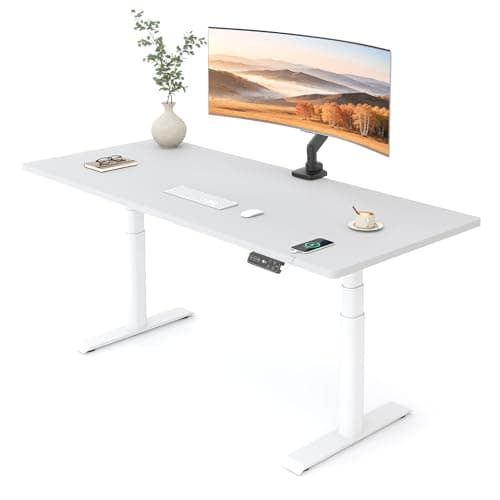
A complete electric sit-stand desk costs roughly $280 to $900, and most people are well served between $300 and $500. Under about $280 you are usually buying a two-stage frame with a short height range and a two-to-five year warranty; between $300 and $500 you get three-stage legs, a usable 23" to 49" range and four memory presets; above $500 you are buying capacity, warranty length and the ability to choose your own desktop rather than extra height. A frame on its own starts around $500 before you add a top, which is why a finished budget desk often costs less than a premium frame alone.
The short answer
"How much is a standing desk" has a wide answer because two very different products share the name: a finished desk arrives as one box with a top on it, and a frame arrives as legs you then have to put a desktop on. The price gap between them is not a quality gap — it is a different purchase.
The bands below are what this site sees across the desks it ranks. Live prices sit on the buy button of every product page; the bands are the shape of the market, not a quote.
The four bands
|
| Under $300 | A complete desk, usually two-stage legs, one or two memory presets | Range at both ends, and a warranty measured in single years |
| $300 - $500 | Three-stage legs, roughly 23.6" to 48.8", four memory presets, 220 lb class rating | Capacity headroom and a long frame warranty |
| $500 - $900 | 330 lb class ratings, ten-year frame cover, quieter motors, wider tops | Choice of desktop size, finish and edge |
| $900 and up | Frame-and-top configuration, 355 lb ratings, 15-year cover, four-leg options | Nothing most home buyers will miss |
Under $300: what breaks
It is not usually the motor. What fails at this price is range. A two-stage leg has one telescoping section instead of two, which costs roughly four to six inches of travel, and makers nearly always take that out of the bottom — so the desk stands up fine and never sits down properly.
That is the trap worth naming, because it is invisible in a photograph. Two-stage versus three-stage covers the mechanism, and the cheapest desks worth buying names the ones that clear the bar anyway.
$300 to $500: the value band
This is where three-stage legs arrive on a finished desk, and it is the single biggest jump in the whole market. A desk here typically publishes a 23.6" floor and a 48.8" ceiling, four memory heights and a 220 lb rating — enough range for most adults and enough capacity for a normal two-screen setup.
If you buy once and stop thinking about it, buy in this band. Our under-$500 ranking is the shortlist, and VIVO versus FlexiSpot is the brand decision most buyers at this price are actually making.
$500 to $900: capacity and warranty
Above $500 the specification that moves is load rating and cover, not height. A desk here publishes around 330 lb instead of 220, ten years on the frame and motor instead of five, and quieter motors. The ceiling is usually identical to the band below it.
Height is not what the extra money buys
Compare published ranges across bands before you spend up for "more desk". On several ranges the $500 model and the $800 model stop at the same ceiling, and the difference is entirely capacity, warranty and noise.
$900 and up: configuration
The top band is mostly frames sold separately from tops. You choose the size, the finish and the edge profile, and you get the longest warranties on the market — fifteen years on a UPLIFT V-series frame, covering the desktop, frame, motors and electronics.
Add a real desktop and the all-in figure lands above a finished desk from the value band. That is the trade: configuration and cover, not extra travel.
From the picks
One desk from each band
Three-stage legs, dual motors and four memory presets under a one-piece 55" top, at the price most two-stage desks ask — the best value of any full desk we rank.
The same footprint and the same range as the E6, with half again the capacity, a quieter motor pair and double the frame warranty. It is the version worth the difference for most desks.
UPLUPLIFT DeskV3 Standing Desk FrameNo licensed photo yet
Best current-generation buy
The V2's replacement, and the one that will actually be in stock. UPLIFT puts the range at 22.6" to 48.7" — a lower floor than the V2, which matters more than the ceiling for most people — on the same 355 lb rating and 15-year warranty.
The costs that are not the desk
- A mat, if you actually stand. The cheapest meaningful upgrade to a standing desk, and the one people buy three weeks late — whether you need one.
- A monitor arm, if the desk moves. A screen on a stack of books is fine at one height and wrong at the other.
- Cable slack. A desk that travels two feet pulls every cable with it; the cable management guide is the cheap fix.
- A chair you will still sit in. Most of a sit-stand day is still seated.
Where most people should stop
At the top of the value band. Run the height calculator, check the number against a published range, and buy the cheapest three-stage desk that clears it with a warranty you are happy with. Spending past that buys capacity you will not use and a warranty you will probably never claim — both nice, neither necessary.
If the budget will not stretch to the value band at all, a converter on the desk you already own is the better buy than a compromised desk.