The short answer
No — not on its own. Standing instead of sitting uses slightly more energy than sitting, but the difference is small, it is easily cancelled by eating slightly more, and the published evidence on sit-stand desks does not support weight loss as an outcome. The Cochrane review of workplace interventions to reduce sitting concluded that the health effects of sit-stand desks remain unproven. What genuinely changes the energy arithmetic is movement, which is why the products at the bottom of this page are walking pads rather than desks. If weight is your actual goal, buy the thing that makes you move.
The short answer
A standing desk changes your posture. It does not change your diet, your training or your daily step count, and those are what move body weight. Standing is better than sitting for several reasons — it is just not a weight-loss intervention, and the people who buy one expecting to be lighter in three months are the people who stop using it in four.
What the evidence says
This site does not run studies, so the honest thing to do is quote the people who review them.
The Cochrane review of workplace interventions for reducing sitting at work is the most careful synthesis available, and Cochrane's own plain-language summary is blunt: the health effects of sit-stand desks and of interventions aimed at reducing sitting at work are still unproven. That is a statement about the quality and consistency of the evidence, not a claim that standing is useless — but it is the ceiling on what anybody can honestly promise you.
Where the evidence is stronger is a narrower claim: UT Southwestern cites a 2018 study reporting a 50% decrease in low back pain among sit-stand desk users. Note what that is — a pain outcome, not a weight outcome. The same page is clear about what the research does and does not support.
What this means when you are shopping
Any site telling you a standing desk burns a specific number of extra calories per hour is giving you a figure from a model, applied to a body that is not yours, with no account of what you do with the rest of your day. Treat it as marketing, and buy the desk for the reasons that hold up.
Why there is no calorie figure here
You will not find a calories-per-hour number anywhere on this page, and that is deliberate.
Energy expenditure while standing depends on body mass, body composition, how still you stand, footwear, floor surface and what you are doing with your hands. A number that ignores all of that is not a measurement, it is a guess with a decimal point. This site cites every figure it prints to a document you can read — which is the whole method — and no document gives a defensible figure for your body standing at your desk.
What we can say without inventing anything: the difference between sitting and standing is small relative to a day's total energy use, and smaller than the variation in what people eat from one day to the next.
What does change the arithmetic
Walking does. Not because of a magic number, but because the activity is continuous, it lasts for hours of a working day, and it is a mode of movement rather than a posture. This is the one place where a desk purchase genuinely connects to energy expenditure, and it is why the walking-pad guide is a more useful page than this one if your goal is physical rather than postural.
Three constraints decide whether a pad will actually be used, and all three are specifications you can check:
From the picks
What we'd actually buy for movement
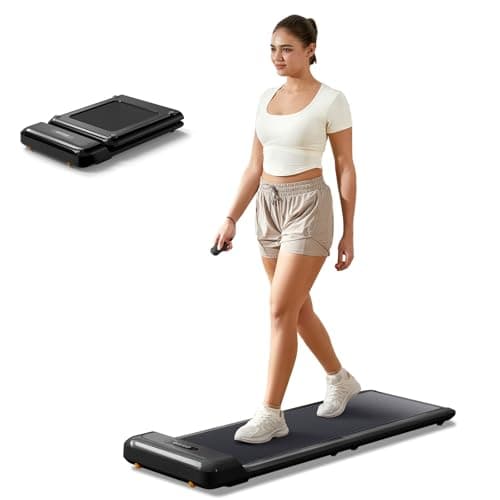
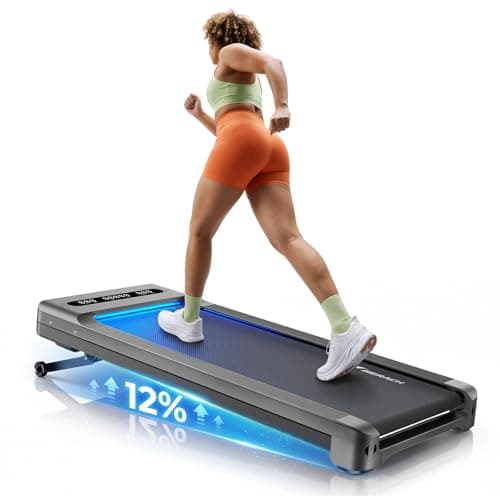
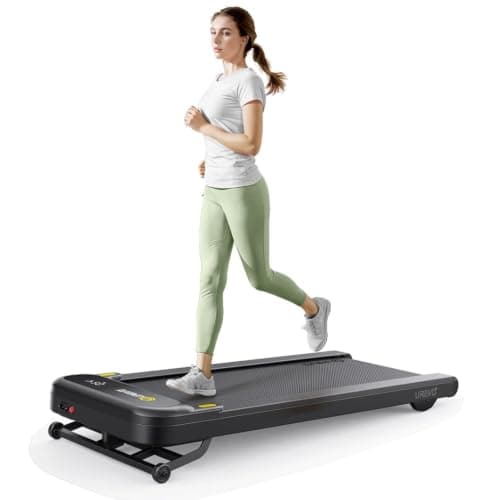
If the goal is energy expenditure rather than posture, these are the three pads we would start from — small, durable and inclined respectively.
Folds in half to a 32-inch footprint, which is the entire point. The 220 lb rating and 3.7 mph ceiling are the two limits to check against yourself before you buy.
A 400 lb peak rating on a 67.7 lb steel frame puts this in a different class from the light folding pads. It is built around the deck and the motor rather than around how small it folds.
Best incline pad for most people
Nine incline levels and a 42.5-inch belt — the better balance of the two UREVO pads unless you specifically need the 400 lb rating.
The better reasons to buy one
A standing desk is still a good purchase. Just for other reasons, each of which has its own page here:
- Back pain, with caveats. The evidence is more encouraging here, and we lay out exactly how strong it is.
- Changing position. Alternating in blocks rather than standing all day is the pattern the research points at.
- Fitting the desk to your body. A desk at the wrong height is a real daily cost, and an adjustable one solves it — starting with your own numbers.
- Enabling a walking pad. Which brings us back to the paragraph above.
If weight is still your goal
Then buy in this order, which is the opposite of what most people do: the movement first, the desk second. A pad under an existing desk at a workable height beats a beautiful desk you stand still at.
And if you are standing more than you used to, expect your feet and legs to complain before anything else does. That has a specific fix, and it is the cheapest purchase in this whole category.
None of this is medical advice and nobody here is a clinician. If you have a condition that changes how long you can stand or walk, that is a conversation with a doctor rather than with a buying guide.