The short answer
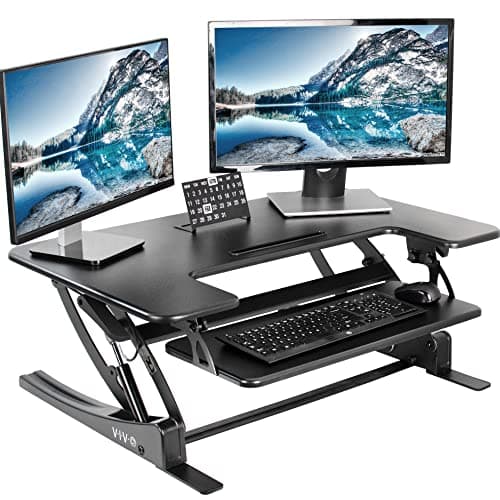
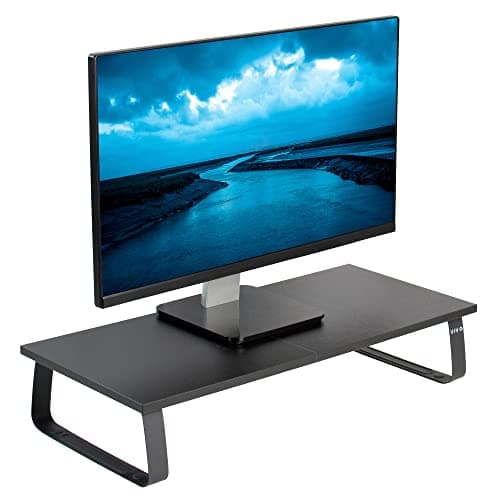
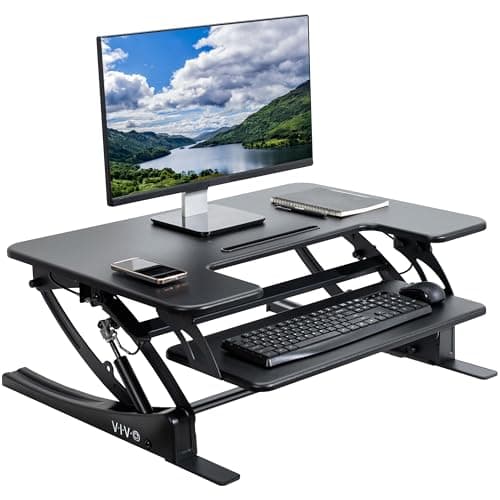
There is no full-size electric standing desk under $200 that we will recommend, and the cheapest complete desk we rank anywhere costs well above that cap. What $200 genuinely buys is better than a bad desk: the VIVO 32-inch converter puts a real standing position on the desk you already own, with its own keyboard tray and up to 17 inches of lift. If two screens are going on it, the 36-inch VIVO is the wider version at the top of the budget. If you only need the screen raised and never lowered, the VIVO 24-inch riser is a fixed 44 lb shelf for a fraction of either. And whatever you pick, a contoured mat is what decides whether you are still standing in week three.
The honest answer first
People searching for a standing desk under $200 are not looking for a converter. They are looking for a desk. We are telling you the desk does not exist at this budget rather than picking the least-bad listing, because at this cap the least-bad listing is still a purchase you will regret.
That is not a snobbery argument, it is a specification argument, and it comes down to three numbers that the sub-$200 desk market cannot hit at once: a seated floor low enough to type at, a standing ceiling high enough for an adult, and a motor and warranty that survive daily cycling. A desk that misses the first one is a standing-only desk. A desk that misses the second is a sitting desk with aspirations. A desk that misses the third is a desk you buy twice.
Why there is no desk here
Below about $300 the market is two-stage frames, single-motor frames and manual cranks, usually in combination. Each of those cuts a specific thing:
- Two-stage legs give up four to six inches of travel from the same collapsed height, and the loss usually lands on the bottom — which is where the seated position lives. The full comparison runs the numbers.
- A single motor driving two legs through a shared crossbar is slower, louder and has one failure point that takes the whole desk with it. Why that compounds is its own page.
- A manual crank works perfectly and gets used twice. The entire benefit of sit-stand is in the switching, and a mechanism that takes forty turns kills the switching.
For reference on what clearing the bar costs: the $400 page is the lowest cap where a full-size, dual-motor, three-stage desk with a genuinely low floor is on the table, and even there it is one desk out of three.
What $200 does buy
A converter is not a consolation prize. It does the one thing that matters — it gives you two positions — and it does it without replacing any furniture, which is why it is also the right answer for renters, for anyone sharing a desk, and for anyone who is not yet sure they will stick with standing.
The mechanism to want at this budget is a spring-assisted lift with a height lock, which is what both VIVO converters use: you lift the surface with one hand and it stays where you put it. The thing to check is the keyboard tray. A converter that raises your monitor but leaves your keyboard on the desk is not a standing desk at all — it is a monitor stand, and it will have you typing with raised shoulders. Both VIVO converters here carry a separate keyboard tray that rises with the top.
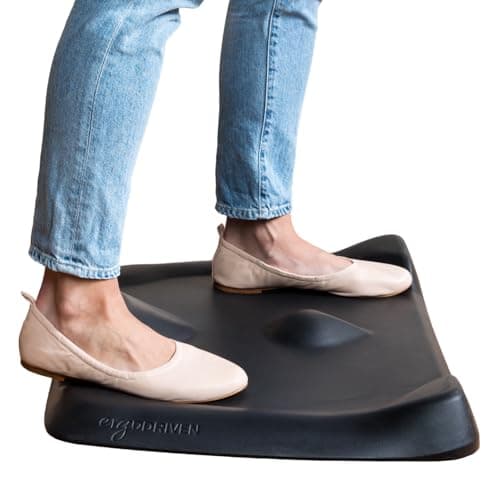
The mat is the pick people skip and then regret. Standing on a hard floor for three hours is a different experience from standing on contoured foam, and the difference shows up as whether you are still doing it in week three. Whether you actually need one is a fair question with a real answer, and the full mat ranking covers the larger options.
The four, measured
|
| VIVO 32" converter | 32" x 22" top, 24.4" x 10.5" keyboard tray | 6.5" – 17" | 33 lb desktop, 4 lb tray | 3 years |
| VIVO 36" converter | 36" x 22" top, 25.2" x 10.6" keyboard tray | 6.7" – 16.9" | 33 lb on the platform | 3 years |
| VIVO 24" riser | 23.8" x 10.3" x 4.6" fixed shelf | None — fixed height | 44 lb | 3 years |
| Ergodriven Topo Mini | 25.2" x 19.2" mat, 2.47" at its highest | Not applicable | Not applicable | 16 years |
Read the lift-range column as the thing you are buying. Seventeen inches of travel is enough to take a seated monitor-and-keyboard position to a standing one for most adults, and it is the entire functional difference between the converters and the fixed riser. The riser is on this page because it is genuinely the right product for one specific person: someone whose screen is too low and who is not trying to stand at all.
Read the capacity column as a hard limit rather than a margin, which is the opposite of how it works on a desk. Thirty-three pounds on a spring-assisted platform is a real ceiling, and a 27-inch monitor plus a laptop plus a dock can reach it. The four-pound keyboard-tray rating on the 32-inch model is the one people trip over — that is a keyboard and a mouse, not a keyboard, a mouse, a mechanical wrist rest and a stack of books.
The one measurement to take first
Measure this before you order anything on this page
Your existing desk's depth. A converter sits on your desk and consumes most of it: both VIVO units here are 22 inches deep, so on a 24-inch desk almost nothing is left in front of or behind them. Thirty inches of desk depth is comfortable. Twenty-four is tight. Under 24 and the converter will overhang at the front, which is unusable and unsafe.
The second measurement is vertical: whatever is above your desk. A shelf, a cabinet or a low window header that sits less than about 20 inches above the desktop will stop the converter before it reaches your standing height, and no amount of lift range fixes a ceiling.
If your desk is shallow or you have no depth to give, the clamp-mounted route is the way out — it takes zero desktop footprint, at a price above this cap.
What to spend next, and when
The useful way to think about $200 here is as the first $200 of a setup rather than the whole thing. In order of how much each next dollar buys:
- A mat, if you skipped it. The cheapest item on this page and the one most likely to decide whether the standing habit survives.
- A monitor arm. It gets the screen off the surface, reclaims the depth a factory stand eats, and is the single highest-value accessory on any sit-stand setup. Arm or stand is a real decision with published trade-offs.
- The desk, eventually. When you know you will use it. At that point the $400 page is where the full-size electric desks start, and the choosing guide will get you to a shortlist in about ten minutes.
What we would not do is spend $200 twice. A bad cheap desk followed by a good desk costs more than a converter followed by a good desk, and the converter keeps earning its place afterwards — on a second desk, in a spare room, or on a kitchen counter.
Why no prices appear in this text
The cap is a bracket, not a quote
No dollar figure is typed into the body of this page. Everything above was inside $200 and listed in stock when the page was written, but prices in this category move weekly. Every number you see on this site comes live from the retailer at the moment the page loads, and where we cannot hold a verified live figure the button reads "check price" rather than quoting one we cannot stand behind.
Nothing on this page has been used by anyone here. The one product this site has lived with is an UPLIFT V2 desk, which costs many times this cap. Every figure above is the maker's or the retailer's published specification, cited below.